If training sessions with your dog feel more like a battle of wills than a bonding activity, positive reinforcement might be the shift you need. It's not about bribery or spoiling your dog. It's a science-backed method that reshapes behavior by rewarding what you want to see more of.
What's Actually Happening in Your Dog's Brain
Positive reinforcement training isn't just a trendy buzzword; it's grounded in decades of behavioral science. “Positive reinforcement training involves rewarding your dog for the things they do right... It's based on the science of animal learning, and it's incredibly effective (Source: AKC).” This isn't guesswork. It's the same operant conditioning principle used across animal behavior science, where consequences directly shape which behaviors a dog repeats and which ones fade away.
Understanding why this works makes it easier to apply consistently. “Dogs increase the frequency of behaviors with pleasant consequences and decrease the frequency of those with unpleasant consequences (Source: AKC).” In plain terms, your dog is constantly calculating what pays off. Your job is simply to make sure good behavior is the option that pays off best.
Why Punishment Often Backfires
Many owners default to correction-based methods because they seem faster, but the science tells a different story. “The use of aversives can have some negative effects... dogs trained with unpleasant actions often associate those aversives with the trainer and the training process. These dogs don't look forward to learning, they don't want to try new things, and their bond with their owner is eroded (Source: AKC).”
That erosion of trust is the real cost of punishment-heavy training. A dog who's afraid of getting it wrong stops experimenting, stops offering behaviors, and starts shutting down instead of engaging. Positive reinforcement flips that dynamic entirely, turning training into something your dog actively wants to participate in.
The Mechanics of Getting It Right
Positive reinforcement sounds simple, but a few technical details separate owners who see fast progress from those who get stuck.
Timing matters more than almost anything else. “Correct timing is essential when using positive reinforcement training. The reward must occur immediately (within seconds) of the desired behavior, or your pet may not associate it with the proper action (Source: Humane World for Animals).” A reward delivered even a few seconds late risks reinforcing the wrong action entirely, like standing up instead of the sit you asked for.
Keep verbal cues short and simple. Dogs don't process full sentences, so a single clear word paired consistently with a behavior works far better than a string of instructions.
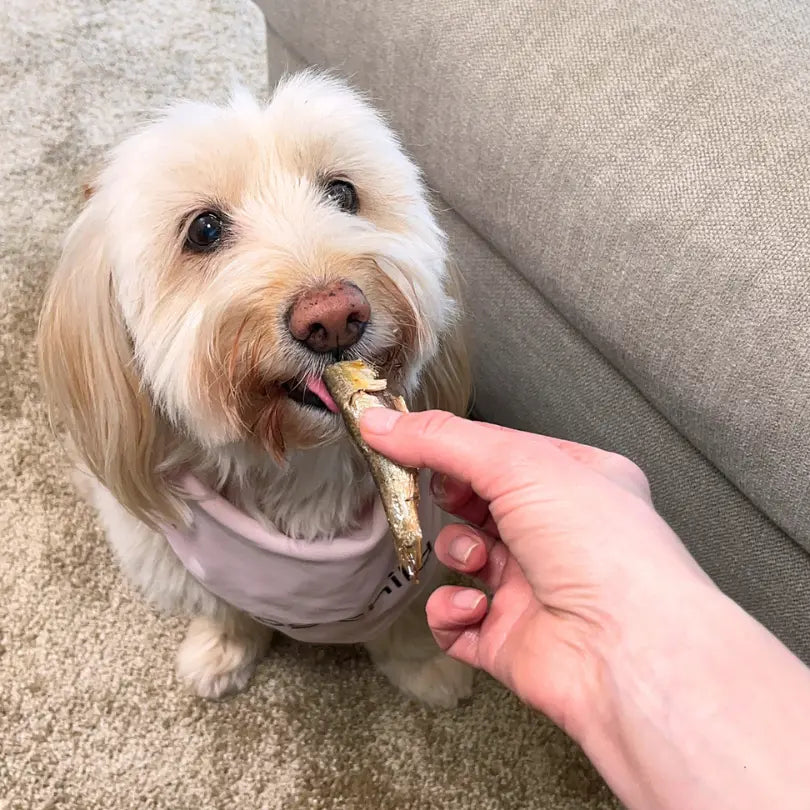
Choose the right treat. It should be small, soft, and easy to eat quickly, ideally pea-sized so your dog stays focused on you instead of chewing.
Pair every treat with verbal praise. Saying an enthusiastic "yes" or "good dog" alongside the treat builds a stronger association over time, eventually allowing praise alone to carry weight.
Everyone in the household should use identical cues. Inconsistent wording between family members creates confusion and slows your dog's progress significantly.
Shaping Behavior Step by Step
Complex behaviors rarely happen all at once, and expecting instant mastery sets both you and your dog up for frustration. Dog trainers use a technique for this exact challenge, gradually raising the bar as a dog's skill improves.
-
Reward small approximations first, like a paw lifting slightly off the ground before a full "shake"
-
Increase the requirement gradually rather than jumping straight to the final behavior
-
Stay patient through the process since dogs build skills incrementally, not overnight
-
Celebrate partial progress rather than waiting only for perfect execution
-
Adjust the pace based on your individual dog's learning speed and confidence level
This gradual approach, often called shaping, prevents the frustration that comes from expecting too much too soon. It also keeps your dog engaged and confident rather than discouraged by constant failure.
Watch for Accidental Rewards
One of the sneakiest pitfalls in positive reinforcement training is unintentionally reinforcing behavior you don't actually want. “Be careful that you don't accidentally use positive reinforcement training to reward unwanted behaviors. For example, if you let your dog outside every time they bark at a noise in the neighborhood, you're giving a reward... for behavior you want to discourage (Source: Humane World for Animals).”
This is where consistency really counts. Every family member and every daily interaction either reinforces the behaviors you want or quietly undermines your training without you realizing it.
Fading Out the Treats
“A common worry among new owners is becoming permanently dependent on treats” - shares Krissy Sperro - The Dog Wizard Academy director, trainer & multilocation owner. The truth is that treat frequency is meant to change as training progresses. In the early stages, dogs need reinforcement every single time they perform a behavior correctly. Once the behavior becomes reliable, you gradually shift to rewarding it only some of the time, stretching the gap slowly so your dog doesn't become confused or frustrated by the change.
Over time, your dog begins working for your praise and connection just as much as for treats, because the relationship itself becomes rewarding. That's the real transformation positive reinforcement offers: not just a well-behaved dog, but one that genuinely enjoys learning alongside you, calm, confident, and eager for what comes next.