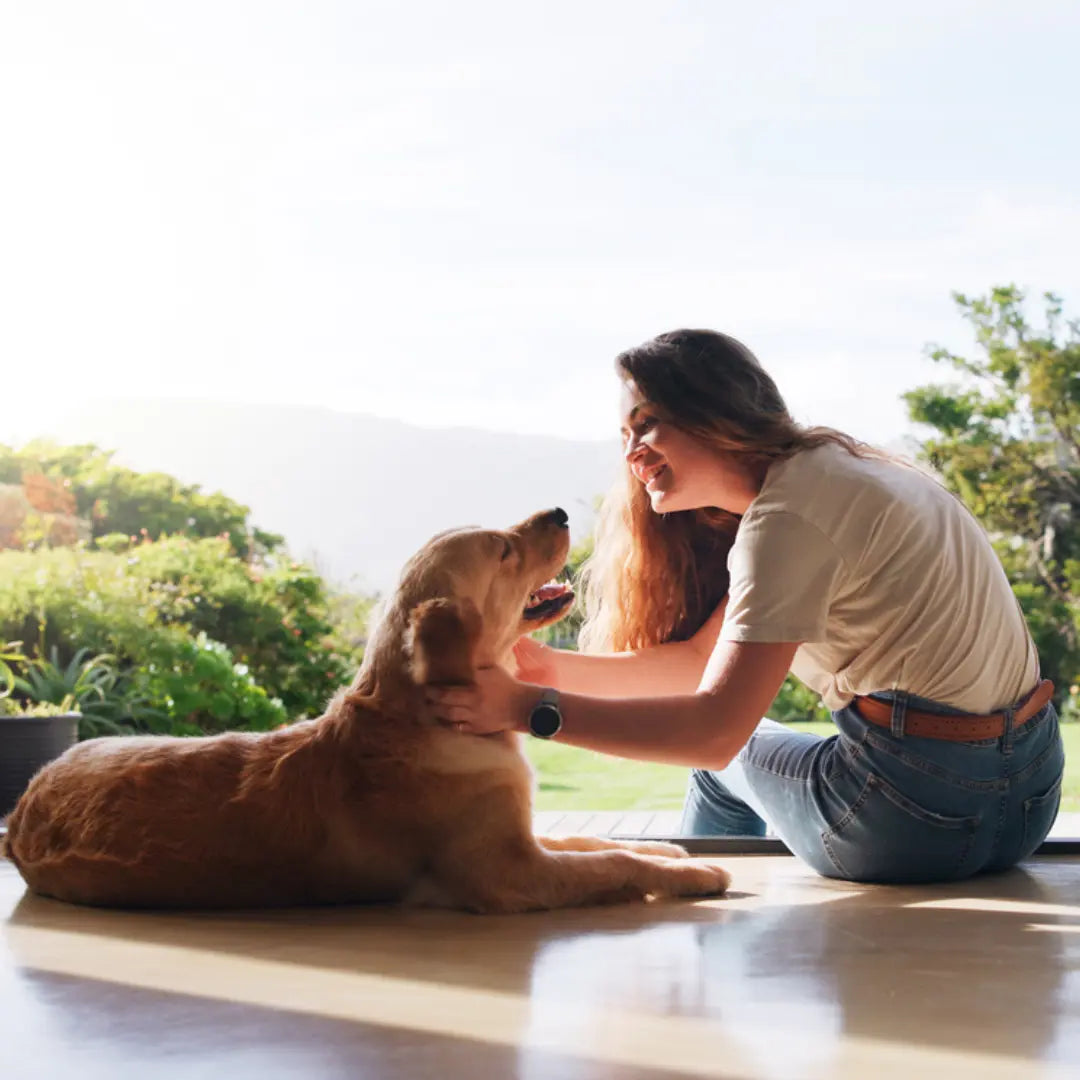
One of the most rewarding relationships for a family is with a pet.
It instills empathy, responsibility, companionship, and probably the first real friendship kids have. Maintaining a peaceful home, however, takes more than good intentions; it takes a structured environment that puts clear physical and behavioral boundaries in place.
For some pet parents, the purpose is to diffuse any stress before it spirals out of control.
When a dog is made to feel cornered, or a child inadvertently breaches a boundary, the outcome may be a 'fear snap' or a reactive bite. When you establish a safety framework that takes a proactive approach, you're not only protecting your child, you are protecting your dog's journey as well as your family's peace of mind.
Here are some important limits that any dog-owning household should set.
The 'Safe Zone' Sanctuary
The most important boundary in a child-safe home is to construct a 'Safe Zone' for the dog. This is a designated area (a dog crate, a laundry room, or even a corner of the living room behind a baby gate) where the dog can go when he feels overstimulated.
The rule of this zone has to be absolute:
If the dog is in their safe spot, it is 'invisible' to the children.
Children should be informed that they do not have permission to be near this space, reach into this space, or disturb the dog from sleep or rest while in his safe place.
A space where a dog does not feel distressed decreases the chances for resource guarding or defensive aggression. It allows the dog to walk away from a stressful situation instead of feeling compelled to use their teeth in order to clear space.
Time at Meals and the High-Price Seclusion of Resources
Resource (food) guarding is the most common cause of bites with kids.
The most docile dog, for instance, has a human-like 'switch' with a higher value, flipping when it comes to their food bowl or a prized chew toy.
Food Management: You would be wise to make a safe place for the dog to eat without interruptions from anybody until they’ve finished eating.
Eventually, you can start teaching them to be around people to prevent bites around food, but much later, when the dogs are a little older, and the kids know the boundaries. Likewise, the dog should be given a 'place' cue to avoid the dinner table as the family eats, and no feeding scraps from the table.
If you want to share dinner, put it in their dish like other meals.
Pro tip: Dogs can sometimes be cranky about their food and when they eat in general. Especially if they're hungry, so it's best to never allow children near your dog while it eats (or chews on a bone).
Even medium-sized dogs can have a powerful bite. So even if it's not intentional, the child might put their hands near the dog's mouth, and the dog, while chewing, could end up biting them.
Also, if the dog is startled, there's a higher risk of a bite.
Ask Permission First
In the throes of a busy family dynamic, kids and dogs interact with each other on a chaotic, unstructured basis. Puppies can get boisterous and start jumping when excited and nipping if there's fun with everything going on.
Create some order by insisting kids ask to pet the dog and cuddle, and the permission will only be given once the dog has calmed and sat nicely. If the pup won't calm down, no hugging rewards for not listening. This helps the adult to determine what is happening and can watch to see if the dog is tired or too excited. When you act as a mediator, each interaction starts with a positive, peaceful atmosphere.
It also teaches children that a dog is a living being with feelings and is not 'on-call' twenty-four hours a day.
Public and Urban Safety
Even a well-trained dog in a high-trafficked urban environment may easily be overwhelmed by abrupt movements, sirens, or noise from crowds of people – things like that. And while startled or anxious, their behavior may be unpredictable.
People in general can be pretty reckless when it comes to dogs in public; their parents may not have taught them that you have to approach slowly and respect their space. It pays to know that local safety regulations can be as important as attending home training, especially for families who live in busy neighborhoods.
For instance, the legislation, especially in regard to dog ownership, is entirely different depending on the state and county you're in.
Here's a quick comparison example to demonstrate what we mean by that:
If there's a dog bite in Chicago, Illinois, you can refer to a Chicago dog bite lawyer and find in this court legal principles that apply to both owners and victims. While suburban neighborhoods may be less rigorous with 'one-bite' rules, major metropolitan areas frequently have stringent liability laws.
In contrast, if the dog bite happened in Austin, Texas, liability might come down to you being able to prove that the owner knew the dog was dangerous in the first place.
This means that in states like Texas, these cases are (usually) defined by prior behavior evidence, while in states like Illinois, they might be defined by location alone. Knowing all that helps make you more aware of how local city codes can affect a conflict involving your dog if it doesn't go as planned.
If you live in an urban area, then socialization training could be the way to go. Another thing that's important is to recognize when your dog's socialization is complete and wants to go home (don't let them become cranky).
Conclusion
If you're looking to create a fully safe home where you can have both your child AND your dog, then you don't have to enforce restrictive rules. This’ll only result in the entire ordeal feeling cumbersome and bad for everyone involved.
What you want is a foundation for mutual respect.
When your child understands boundaries (don't pull the dog's fur, ears, don't disturb the dog while eating, etc.) and the dog knows to follow some basic rules, you're off to a great start.